iPhone 16 vs Samsung Galaxy S25 — Which Flagship Should You Buy?
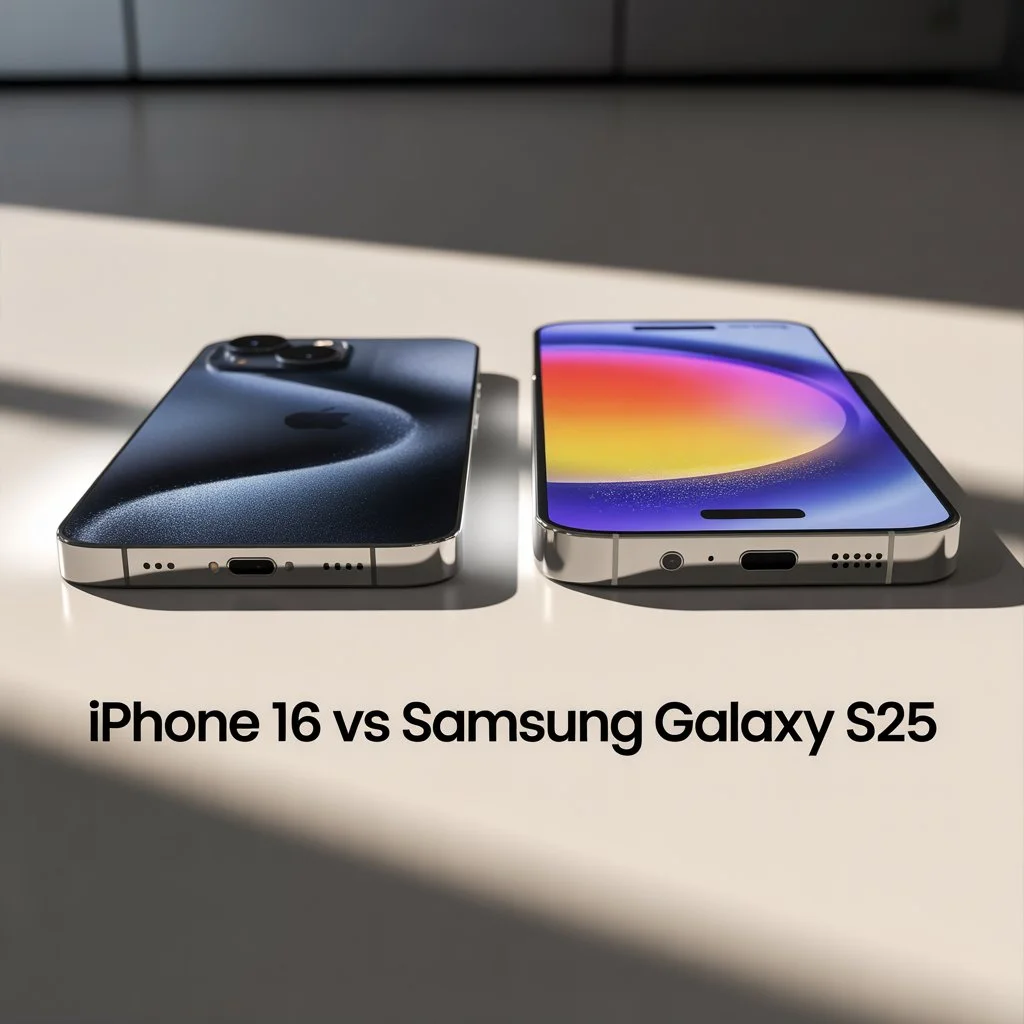
Every year, the same battle plays out across tech forums, comment sections, and family group chats: iPhone or Samsung? It’s the smartphone rivalry that never gets old, and in 2026, it’s more competitive than ever. The Apple iPhone 16 and the Samsung Galaxy S25 are two of the most capable phones ever made — both sitting at the same $799 starting price, both packed with AI features, and both gunning for the title of best flagship smartphone.
But here’s the truth: they are genuinely different phones built around different philosophies, and choosing the wrong one for your lifestyle can leave you frustrated despite owning a world-class device. This guide cuts through the spec sheet noise and tells you exactly which phone is right for you — and why.
Overview — Two Different Visions of a Flagship Phone
Before diving into specifics, it helps to understand what each phone is trying to be.
The iPhone 16 is Apple’s vision of a refined, deeply integrated smartphone experience. It’s built around the Apple ecosystem, Apple Intelligence, and a hardware-software synergy that no Android manufacturer can fully replicate. Every feature is deliberately designed, every component optimized specifically for iOS.
The Samsung Galaxy S25 is Samsung’s vision of a feature-rich, AI-powered Android powerhouse. The Galaxy S25 is a pocket powerhouse, sporting premium internal components and enough AI tools to make any tech-savvy head spin. Samsung’s philosophy is to pack in as many capabilities as possible and let users decide what they need.
Both launched at $799 for the 128GB base model — making price a non-factor at the entry level, and putting the focus squarely on features, performance, and experience.
Design and Display
Design
Both phones feature a familiar flagship design — flat sides, aluminum frames, glass backs, and edge-to-edge displays. Neither represents a dramatic redesign from their predecessors.
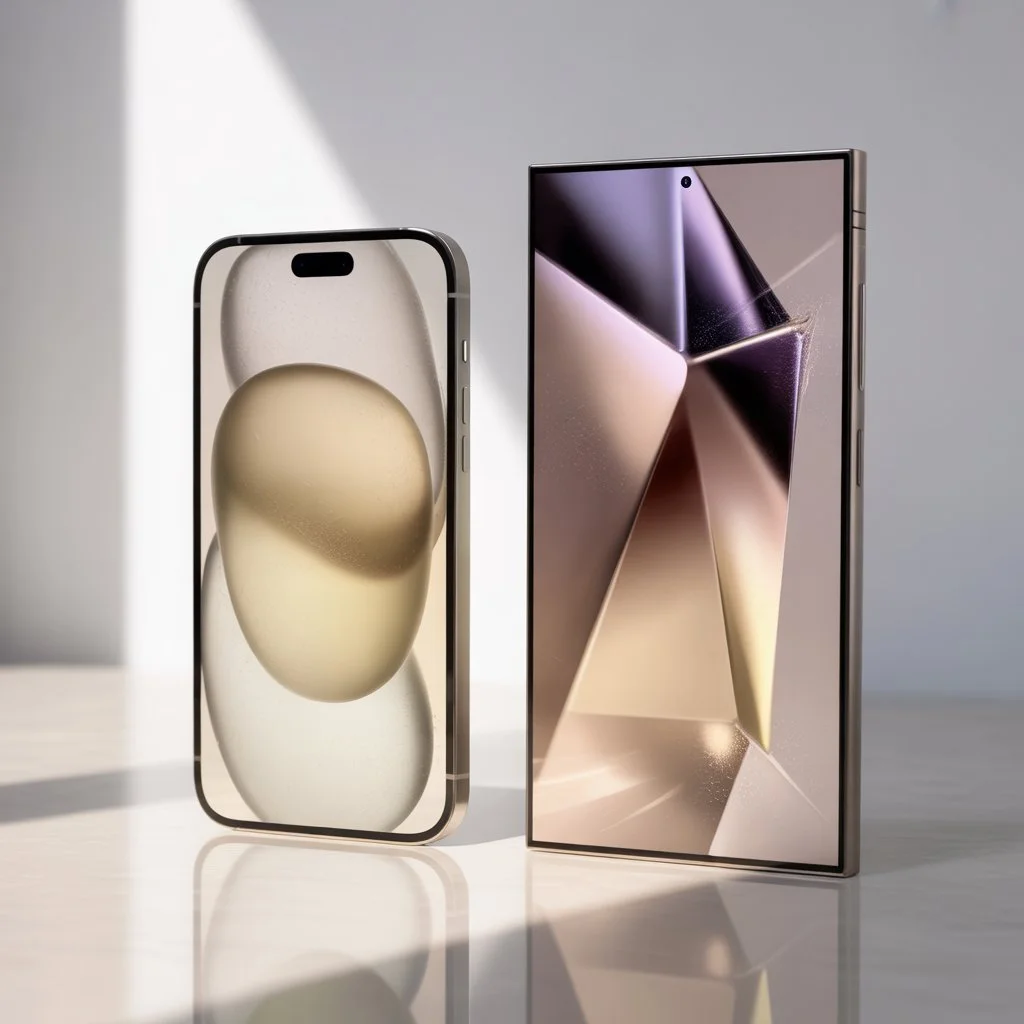
The iPhone 16 keeps Apple’s signature Dynamic Island at the top — the pill-shaped cutout that houses Face ID and the front camera while doubling as a notification hub. It also introduces the new Camera Control button on the right edge — a dedicated hardware shortcut for the camera that lets you adjust settings, zoom, and shoot without touching the screen.
The Galaxy S25 opts for a cleaner punch-hole camera in the top center, giving it a slightly less interrupted screen canvas. Samsung made only modest changes to the Galaxy S25, keeping the same overall look, but the new model is shorter, thinner, and 0.2 ounces lighter than its predecessor.
Winner: Tie — Both are premium, well-built designs. iPhone wins on hardware innovation with Camera Control; Samsung wins on clean screen real estate.
Display
This is one of the Galaxy S25’s clearest advantages over the base iPhone 16. The Galaxy S25 proves superior for the money partly due to its brighter screen. More significantly, the Galaxy S25 features a 120Hz adaptive refresh rate — meaning scrolling, animations, and gaming all look dramatically smoother than on the iPhone 16’s standard 60Hz display.
The 60Hz display on the base iPhone 16 is one of Apple’s most criticized decisions — especially when competing Android flagships at the same price point offer twice the refresh rate. To get 120Hz on an iPhone, you have to step up to the iPhone 16 Pro ($999+).
Winner: Samsung Galaxy S25 — 120Hz vs 60Hz is a visible, daily difference that matters.
Performance and Chipset
iPhone 16 — Apple A18
The iPhone 16 runs on Apple’s A18 chip, built on a 3nm process and one of the most efficient mobile processors ever made. Apple’s advantage has always been the tight integration between its silicon and iOS — resulting in smooth, consistent performance that typically outlasts Android flagships over multi-year usage.
Samsung Galaxy S25 — Snapdragon 8 Elite
The Galaxy S25 runs on Qualcomm’s Snapdragon 8 Elite — and in 2025/2026, Qualcomm genuinely caught up with Apple’s silicon in raw benchmark performance. The Snapdragon 8 Elite for Galaxy outperforms the A18 Pro in multi-core scenarios by 21%, and in GPU-heavy workloads like 3DMark’s Wild Life Extreme, the S25 beats the iPhone 16 Pro by around 38%.
For gaming and graphically intensive applications, the Galaxy S25’s performance advantage is measurable and meaningful. With graphically intensive gaming, the Galaxy S25’s faster refresh rate makes animations look noticeably smoother than on the iPhone 16.
Winner: Samsung Galaxy S25 — on raw benchmarks. However, Apple’s long-term performance consistency over 3–4 years of ownership remains an edge that benchmarks don’t fully capture.
Camera System
iPhone 16 Camera
The iPhone 16 features a dual-camera system — a 48MP main Fusion camera with f/1.6 aperture and a 12MP ultrawide. Apple’s virtual 2x telephoto is a computational crop of the main sensor rather than a dedicated lens.
What the iPhone 16 does exceptionally well is video. Apple’s video processing, color science, and Cinematic Mode remain the gold standard for smartphone videography. Content creators who prioritize video output consistently choose iPhone for a reason. The iPhone 16 Pro Max’s video quality is unmatched — and while we’re comparing the base models here, that video DNA runs throughout the iPhone 16 line.
The new Camera Control button is a genuinely useful addition — letting you quickly adjust exposure, zoom, and shooting modes with a dedicated hardware key rather than fumbling through on-screen controls.
Samsung Galaxy S25 Camera
The Galaxy S25 has three cameras — a 50MP Wide camera with f/1.8 aperture, a 10MP Telephoto with 3x optical zoom and OIS, and a 12MP Ultra-Wide camera with a 120-degree field of view.
The triple camera system gives the Galaxy S25 a meaningful real-world advantage for photography — particularly for zoom shots where the iPhone 16’s 2x computational zoom can’t match a dedicated 3x optical telephoto lens. The Galaxy S25 wins the camera round due to its triple camera system.
For still photography and zoom versatility, Samsung leads. For video quality and consistency, iPhone leads.
Winner: Draw — Samsung wins on camera versatility and zoom. iPhone wins on video quality. Your preferred use case determines the winner here.
Battery Life
This is where the Galaxy S25 pulls ahead most decisively for everyday users.
The Galaxy S25 reaches an average of 15 hours and 51 minutes in battery benchmark testing, while the iPhone 16 taps out after 12 hours and 13 minutes — that’s more than 3.5 hours longer for the Galaxy S25.
A 3.5-hour difference in battery life is not a marginal gap — it’s the difference between confidently leaving home without a charger and anxiously watching your battery percentage throughout the day.
On charging speed, both phones are broadly similar in real-world testing. Both get to 50% battery from a 30-minute USB-C charge. Samsung’s Wireless PowerShare — which lets the Galaxy S25 wirelessly charge other devices — is a genuinely useful bonus feature the iPhone doesn’t offer.
Winner: Samsung Galaxy S25 — and it’s not particularly close.
AI Features — Apple Intelligence vs Galaxy AI
AI has become one of the central battlegrounds between Apple and Samsung, and both phones have invested heavily in on-device AI capabilities.
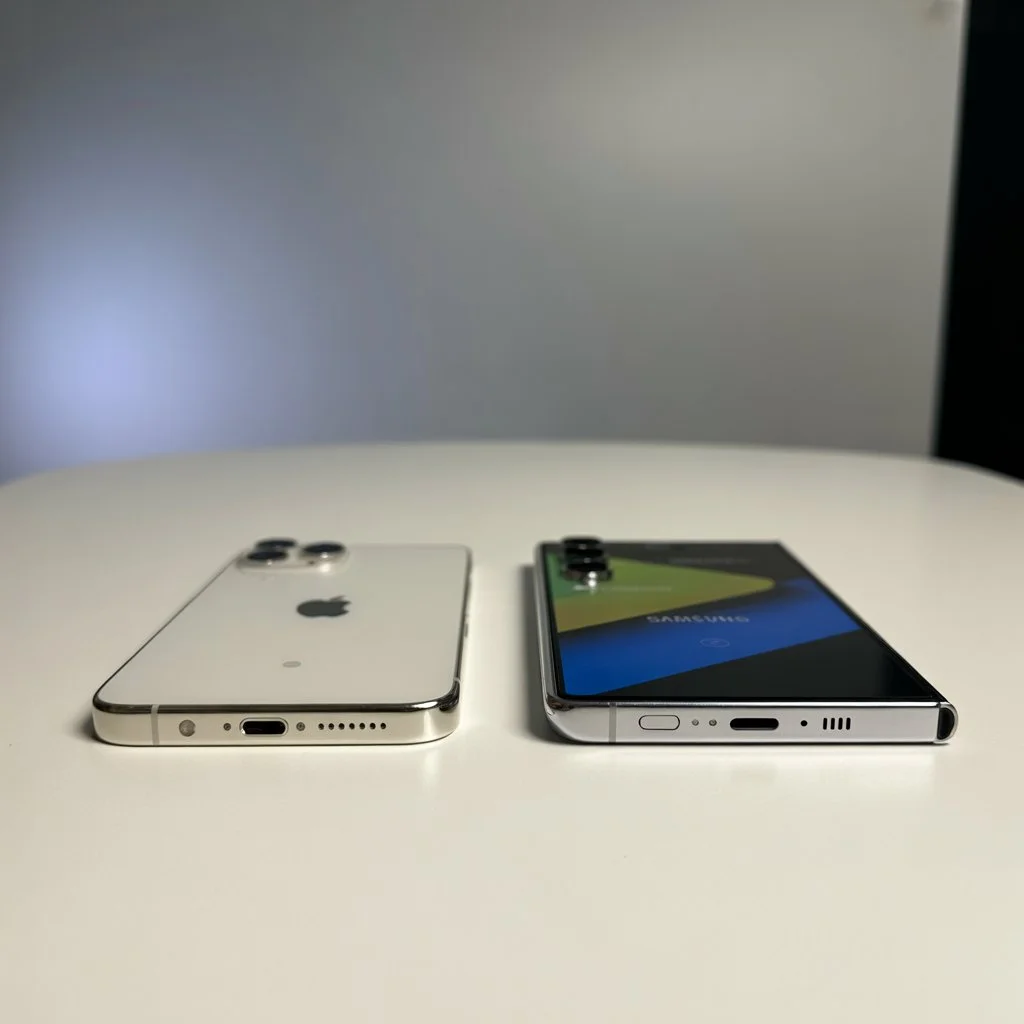
Apple Intelligence (iPhone 16)
Apple Intelligence is Apple’s suite of AI features built into iOS 18 and optimized for the A18 chip. It includes Writing Tools for improving text across apps, enhanced Siri with deeper system integration, smart photo editing tools, Priority Notifications, and more. Apple’s approach prioritizes privacy — most processing happens on-device rather than in the cloud.
The main criticism of Apple Intelligence in 2026 is that some features still feel incomplete or less capable than Samsung’s equivalent offerings.
Galaxy AI (Samsung Galaxy S25)
Galaxy AI is Samsung’s comprehensive AI layer built on top of Android, powered by a combination of on-device processing and Google’s cloud AI infrastructure. It includes Live Translate for real-time call translation, Circle to Search (Google’s AI search triggered by circling anything on screen), Chat Assist for message writing suggestions, Note Assist for summarizing and formatting notes, and Transcript Assist for live meeting transcription.
The Galaxy S25 proves superior for the money partly due to its outstanding software — the AI features are much more refined, and there’s simply more you can do with it than the iPhone 16.
Winner: Samsung Galaxy S25 — Galaxy AI is more mature, more feature-rich, and more deeply integrated into real-world daily tasks as of 2026.
Software and Ecosystem
iOS 18 — iPhone 16
iOS is beloved for its smoothness, stability, security, and ecosystem connectivity. If you own a Mac, iPad, Apple Watch, AirPods, or Apple TV, the iPhone integrates seamlessly with all of them in ways Android simply cannot match. iMessage, AirDrop, Handoff, Universal Clipboard, and Continuity Camera are all features that make the Apple ecosystem feel genuinely magical once you’re inside it.
Apple also has a strong track record on software longevity. iPhones typically receive major iOS updates for 5–6 years, meaning your investment stays relevant longer.
One UI 7 — Samsung Galaxy S25
One UI 7 on the Galaxy S25 is Samsung’s most polished Android experience yet. Samsung offers longer software support than most Android manufacturers — promising 7 years of OS and security updates for the Galaxy S25, which actually exceeds Apple’s typical support window.
Android’s customization freedom, Google ecosystem integration, and broader app flexibility give it advantages that iOS users simply don’t have access to.
Winner: Depends on your ecosystem — iPhone wins if you’re in Apple’s world. Samsung wins on update longevity and Android flexibility.
Full Specs Comparison
| Feature | iPhone 16 | Samsung Galaxy S25 |
|---|---|---|
| Starting Price | $799 | $799 |
| Display | 6.1″ 60Hz OLED | 6.2″ 120Hz AMOLED |
| Chipset | Apple A18 | Snapdragon 8 Elite |
| RAM | 8GB | 12GB |
| Main Camera | 48MP (dual) | 50MP (triple) |
| Optical Zoom | 2x (virtual) | 3x optical |
| Battery | 3,561mAh | 4,000mAh |
| Battery Life | ~12 hours | ~15.5 hours |
| Charging | ~27W wired | 25W wired |
| Wireless Charging | MagSafe 25W | 15W Qi2 |
| Biometrics | Face ID | Under-display fingerprint |
| Software Support | ~5-6 years | 7 years |
| AI Features | Apple Intelligence | Galaxy AI |
| OS | iOS 18 | Android 15 / One UI 7 |
Who Should Buy the iPhone 16?
- You’re already in the Apple ecosystem with a Mac, iPad, or Apple Watch
- Video quality is your top camera priority
- You value iOS’s smoothness, security, and stability above all else
- You prefer a more curated, controlled software experience
- Apple Intelligence and Siri integration matter to you
- Resale value is a consideration — iPhones hold their value better than Android flagships
Who Should Buy the Samsung Galaxy S25?
- You want the best battery life at this price point — period
- A 120Hz display matters to you for gaming and smooth scrolling
- You need a triple camera system with genuine optical zoom
- Galaxy AI features appeal to you for daily productivity
- You prefer Android’s customization and flexibility
- You want 7 years of guaranteed software support
Final Verdict
Taking into consideration that both are priced at $799, the Galaxy S25 proves to be the superior phone for the money — with better specs, longer battery life, a brighter screen, and outstanding software.
On pure value and hardware, the Galaxy S25 wins this comparison. More cameras, better battery, smoother display, and more capable AI features at the same price is a compelling argument that’s hard to dismiss.
But here’s the real-world nuance that specs sheets miss: ecosystem matters more than any single feature. If your life runs on Apple products, the iPhone 16’s seamless integration with everything else you own is worth more than any hardware advantage Samsung can offer. And if you’re a dedicated video creator, iPhone’s video quality remains the benchmark.
The honest verdict: if display, gaming, and design are more important to you, choose the Samsung Galaxy S25. If camera quality, software stability, and ecosystem are your priority — go for the Apple iPhone 16.
Both are excellent phones. Neither will disappoint. The decision ultimately comes down to one simple question — are you an Apple person or an Android person? Because in 2026, both sides have never had a stronger argument.
Still deciding? Visit your nearest carrier store and spend 15 minutes with each phone. No review can replace the feel of a device in your hand.